


 English - EN
 繁體 - ZH-TW
 简体 - ZH-CN
 Español - ES
 日本語 - JA
 العربية - AR
 Русский - RU
 Français - FR




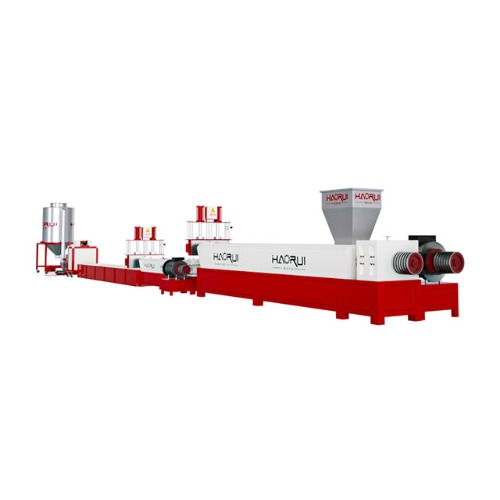
PET Pellets Maker with Automation
カテゴリー : ペレット化ライン
The PET Pellets Maker features a modular design for flexible configuration,high-output performance,and automated operation.It is designed to efficiently process recycled PET materials into uniform pellets while improving production efficiency,reducing manual labor,and supporting reliable continuous operation. Overview of A PET Granulator Line A PET granulator line is a core processing system for converting polyethylene terephthalate waste into uniform granules or flakes suitable for reuse in downstream manufacturing.In today’s recycling-driven supply chain,this equipment plays a decisive role in improving material recovery,reducing landfill dependence,and supporting stable feedstock for fiber,sheet,strapping,and injection applications.For international B2B buyers,the value of a PET granulator line is not limited to size reduction alone.The real advantage lies in achieving controlled particle size,reduced contamination,consistent throughput,and predictable material properties that directly influence reprocessing efficiency. Unlike basic shredding equipment,a complete granulator pet is designed as an integrated production system.It typically includes feeding,crushing or de-baling,granulation,separation,washing interface,drying,and collection.Depending on the input material—PET bottles,trays,packaging scrap,or production reject—the line can be configured to deliver different output specifications.This flexibility makes it essential for recycling plants,material recovery facilities,and manufacturers seeking internal waste reutilization. Components of A PET Granulator Line A complete mesin granulator is usually built around several integrated modules,each contributing to efficiency and product quality.The feed section may include a conveyor,belt feeder,or manual loading station,depending on the material format.For baled bottles or mixed waste,a de-baler or pre-shredder can help break up compacted input and reduce load stress on the main granulator. The granulating chamber is the heart of the system.It typically uses a high-speed rotor fitted with wear-resistant blades,arranged to create efficient cutting action against stationary knives.Screen size selection is critical because it determines the final particle size distribution.Smaller screens produce finer output,while larger openings increase throughput and reduce energy load.This trade-off must be matched to the intended end use. After granulation,the material may pass through pneumatic conveying,cyclone separation,or a wet washing stage,depending on the plant configuration.In PET recycling,washing is particularly important because labels,adhesives,caps,and fine contaminants can affect final resin quality.Drying and dewatering modules further reduce moisture,which is essential for minimizing hydrolysis and improving melt stability in later processing. Performance Benefits of using A PET Granulator Line A properly configured plastic recycling granulating machine delivers measurable production benefits.First,it improves material homogeneity,which supports more consistent washing and drying.Second,it reduces manual handling by automating size reduction and material transfer.Third,it enhances plant productivity by enabling continuous operation with controlled feed rates and lower downtime. From a quality perspective,granulation helps remove or separate non-PET components more effectively.Smaller and more uniform particles are easier to wash,dry,and inspect,which lowers contamination risk.This is especially important for applications where recycled PET must meet strict processing requirements,such as sheet extrusion or high-grade fiber production.In these cases,consistent granule geometry and low residual contamination can directly influence tensile performance,clarity,and processing stability. Energy efficiency is another important advantage.Modern plastic granulating machines often use optimized rotor designs,precision-balanced shafts,and efficient motor systems to reduce unnecessary power consumption.When these machines are matched to the actual material load,they can operate with improved specific energy use per ton of processed PET.Over time,this contributes to lower operating costs and better environmental performance. Features of A PET Granulator Line When sourcing a PET pellets maker,international buyers should focus on technical details rather than only machine capacity.Blade material and hardness are critical because PET can be abrasive when mixed with labels,dust,or glass-like contaminants.Wear-resistant tool steel or equivalent hardened alloys are often used to extend service life and maintain cutting quality.The rotor should also be dynamically balanced to reduce vibration and protect bearings under continuous operation. Screen design is another important factor.A properly selected perforated screen controls particle size and influences both throughput and final quality.Fine screens can improve uniformity but may reduce output if the feedstock is heavily contaminated or irregularly shaped.For that reason,screen changeover convenience is valuable in plants that process different PET grades. Noise control,dust management,and safety interlocks should also be considered.A robust housing design helps contain fragments and reduce operator exposure.Access doors,emergency stops,overload protection,and blade adjustment systems all contribute to safer and more reliable plant operation.For large-scale facilities,integration with automatic control panels and current monitoring systems can improve process visibility and maintenance scheduling. Applications of A PET Granulator Line The output of a plastic granulator can serve multiple downstream markets.In bottle-to-bottle recycling,the granules or flakes may be washed,dried,and further purified before re-extrusion into new packaging material.In fiber production,the output is often used as feedstock for polyester staple fiber,where cleanliness and moisture control are especially important.In sheet manufacturing,uniform granules support stable melting and consistent thickness control. Industrial scrap recovery is another major use case.Packaging converters,preform producers,and blow molding plants often generate PET offcuts that can be directly reprocessed in-house.A dedicated granulator line allows these facilities to reclaim valuable material and reduce dependence on virgin resin.This closed-loop approach improves resource efficiency and supports circular manufacturing strategies. For waste management operators,a PET pellets maker also enhances the economics of material recovery.By increasing the value and usability of the recovered PET fraction,the system helps turn low-value waste into a standardized industrial input.In markets where recycling quality and traceability matter,this can be a major competitive advantage. PET Granulator Line Manufacturer - Haorui Machinery:https://www.petrecyclingmachinery.com/PET-Granulator-Line-pl48560357.html Plastic Recycling Machines & Solutions - Haorui Machinery:https://www.petrecyclingmachinery.com/products.html PET Bottle Recycling Machine & Plastic Crusher - Haorui Machinery:https://www.petrecyclingmachinery.com/

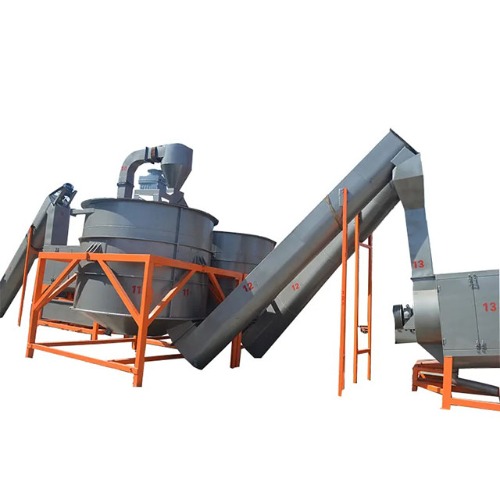
Fibre Grade PET Cleaning System with Automation
カテゴリー : 用途別リサイクルライン
Automatic Fibre-Grade PET Bottle Washing Recycling Line The automatic fibre-grade PET bottle washing recycling line is an integrated plastic recycling system designed to convert post-consumer PET bottles into clean,high-quality recycled PET flakes suitable for polyester fiber production.The line combines automatic material handling,efficient bottle separation,intensive washing,contaminant removal,mechanical dewatering,thermal drying,and final flake classification in one continuous process. Built for high-throughput plastic recycling plants,this recycled bottle to fiber production line helps processors recover valuable PET from discarded beverage bottles and transform it into a consistent secondary raw material for applications such as staple fiber,filament yarn,nonwoven fabrics,strapping,and other polyester products. Product Overview PET bottles typically contain labels,caps,rings,adhesives,dirt,moisture,and other contaminants that must be removed before the material can be reused.The automatic fibre grade PET bottle washing line is engineered to separate and clean these components while minimizing PET loss and preserving the quality of the recovered polymer. After processing,the fibre grade PET bottle recycling line produces washed PET flakes with controlled moisture,reduced contamination,and stable bulk density.The final product is commonly used as feedstock for polyester fiber manufacturing and other non-food-grade PET recycling applications. Typical Processing Flow The complete fibre grade PET bottle washing line may include the following stages: 1.Bottle Bale Opening and Feeding Compressed PET bottle bales are loaded into a bale breaker or bale opener.The equipment loosens the bottles and feeds them continuously to the sorting section. 2.Pre-Sorting and Manual Sorting Operators or automated sorting equipment remove PVC bottles,metal objects,heavily contaminated containers,hazardous materials,and other non-PET items.Effective sorting at this stage improves final flake quality and protects downstream equipment. 3.Label and Cap Separation A label remover machine separates loose and attached labels from the bottles.Caps and rings,which are typically made from HDPE or PP,are removed during the process through air separation,density separation,and washing. 4. Bottle Crushing A wet granulator or PET bottle crusher cuts the bottles into smaller pieces.Water may be introduced during crushing to reduce dust,control heat,and begin the initial rinsing process. 5. Pre-Washing The pre-washing section removes loose dirt,sand,beverage residues,and other surface contaminants before intensive cleaning. 6. Hot Washing PET flakes are washed in a heated solution that helps remove oils,adhesives,labels,organic residues,and stubborn contamination.The hot-washing system can be configured with detergent according to the incoming material and required output quality. 7. Friction Washing A high-speed friction washer applies mechanical scrubbing action to the flakes.This stage removes remaining dirt,glue,paper fibers,and surface residues while improving flake cleanliness. 8. Rinsing and Floating Separation Clean-water rinsing removes detergent and loosened contaminants.A float-sink tank separates PET flakes from lighter materials such as PP and HDPE caps,labels,and other low-density plastics. 9. Mechanical Dewatering A centrifugal dewatering machine removes most of the surface water from the washed flakes,reducing the energy required for thermal drying. 10. Thermal Drying Hot-air drying reduces residual moisture to a controlled level suitable for storage,packaging,or further processing. 11. Air Classification and Fine Separation Air separators remove lightweight labels,films,dust,and residual fines.Additional screens,magnetic separators,or metal detectors can be installed to improve product purity. 12. Flake Storage and Packaging The finished PET flakes are conveyed to a storage silo,cyclone,or jumbo-bag filling station for convenient handling and shipment. Key Features Fully Automatic Operation The fibre grade PET bottle recycling machine is designed for continuous operation with centralized controls for feeding,crushing,washing,conveying,drying,and packaging.Automated sensors and control systems help regulate material flow,water temperature,residence time,and equipment status. Designed for Fibre-Grade PET Flakes The washing and separation process is configured to produce clean PET flakes appropriate for polyester fiber production.The final quality depends on feedstock composition,sorting effectiveness,process settings,and the selected equipment configuration. Efficient Contaminant Removal The pet bottle to polyester fibre machine targets common PET bottle contaminants,including: - Labels and label adhesive - PP and HDPE caps and rings - Dirt,sand,and dust - Beverage residues - Oil and grease - Paper and organic matter - PVC and other incompatible plastics - Metal particles - Lightweight films and floating materials Integrated Hot-Washing Technology Hot washing in PET bottle cleaning system improves the removal of difficult contaminants that cannot be effectively eliminated through cold washing alone. Temperature,detergent concentration,washing time,and water circulation can be adjusted to meet different feedstock conditions. Reduced PET Loss The fibre grade PET bottle washing machine uses controlled conveying,density separation,and optimized washing stages to limit the loss of usable PET flakes.Proper equipment matching helps improve recovery rates and overall plant profitability. Water Recycling Capability A water-treatment and recirculation system can be integrated to reduce fresh-water consumption.The system may include settling tanks,filtration units,screw presses,dissolved-air flotation,and other treatment equipment depending on local regulations and the level of contamination. Modular and Customizable Configuration The fibre grade PET recycling machine can be customized based on: - Required production capacity - Bottle bale quality - PET contamination level - Desired flake cleanliness - Available factory space - Local utility conditions - Water-treatment requirements - Automatic or semi-automatic operation preferences Durable Construction Key components are manufactured from wear-resistant materials and corrosion-resistant stainless steel where appropriate.High-wear areas,such as crushers,friction washers,screw conveyors,and dewatering machines,can be equipped with replaceable wear parts to simplify maintenance. Stable Flake Quality Multiple separation and washing stages help achieve a consistent output in terms of cleanliness,particle size,moisture content,and bulk density.Stable flake quality supports more reliable downstream fiber production. Main Equipment Configuration A typical automatic PET bottle cleaning system may include: - Bale opener or bale breaker - Infeed conveyor - Trommel or pre-sorting screen - Manual sorting conveyor - Magnetic separator - Label remover - Wet PET bottle crusher - Pre-washer - Hot-washing tank - Friction washer - Float-sink separation tank - High-speed friction washer - Dewatering machine - Hot-air drying system - Zigzag air separator - Vibrating screen - Metal detector - Conveying system - PET flake storage silo - Automatic bagging or jumbo-bag filling system - Electrical control cabinet - Water circulation and wastewater-treatment system The exact configuration can be adjusted according to the raw material and required product specifications. Output Applications The washed PET flakes produced by this fibre grade PET Cleaning system are suitable for use in the manufacture of: - Polyester staple fiber - Recycled polyester filament - Nonwoven fabrics - Hollow fiber filling - Recycled PET strapping - Engineering plastic compounds - Thermoformed PET products - Other non-food-grade recycled PET products For applications requiring particularly high purity or advanced polymer performance,additional equipment such as optical sorters,near-infrared separators,melt filtration,pelletizing systems,or solid-state polycondensation units may be added. Operational Benefits - Converts waste PET bottles into valuable recycled material - Supports high-volume,continuous plastic recycling - Reduces dependence on virgin PET resin - Helps lower landfill disposal and environmental pollution - Improves material recovery from post-consumer waste - Reduces manual labor through automated processing - Produces a saleable raw material for the textile and plastics industries - Supports more efficient use of water and energy when paired with recycling systems - Allows flexible integration into existing plastic recycling plants Quality and Performance Considerations The quality of fibre-grade PET flakes depends not only on the fibre grade plastic recycling equipment but also on the quality of the incoming bottles.Feedstock with excessive PVC,oil,dirt,multilayer materials,or non-PET plastics may require enhanced sorting and washing equipment. For best results,the plastic recycling plant should maintain: - Effective pre-sorting - Controlled hot-washing conditions - Proper separation of caps and labels - Regular water replacement or treatment - Correct crusher and screen settings - Routine removal of accumulated contaminants - Regular inspection of wear parts - Proper control of final flake moisture Ideal Applications This automatic fibre grade PET recycling machine is suitable for: - Plastic recycling plants - PET bottle recycling facilities - Polyester fiber manufacturers - Waste management companies - Material recovery facilities - Circular-economy projects - Industrial recyclers processing post-consumer PET bottles Product Summary The automatic recycled bottle to fiber production line provides a complete solution for processing used PET bottles into clean,reusable flakes for plastic recycling.With automated conveying,advanced washing,density separation,dewatering,drying,and optional water-treatment systems,the PET bottle washing line is designed to deliver reliable performance,efficient contaminant removal,and consistent fibre-grade PET output. It is an effective investment for plastic recycling plants seeking to increase PET recovery,improve product quality,reduce operating labor,and supply recycled raw materials to the polyester fiber and plastics industries. Fibre Grade PET Cleaning System with Durable Construction Special Design Automation Customization:https://www.petrecyclingmachinery.com/Fibre-Grade-PET-Cleaning-System-with-Durable-Construction-Special-Design-Automation-Customization-pd533023348.html PET Bottle Washing Line Manufacturer - Haorui Machinery:https://www.petrecyclingmachinery.com/PET-Bottle-Washing-Line-pl43660357.html Plastic Recycling Machines & Solutions - Haorui Machinery:https://www.petrecyclingmachinery.com/products.html PET Bottle Recycling Machine & Plastic Crusher - Haorui Machinery:https://www.petrecyclingmachinery.com