


 English - EN
  繁體 - ZH-TW
  简体 - ZH-CN
  Español - ES
  日本語 - JA
  العربية - AR
  Русский - RU
  Français - FR

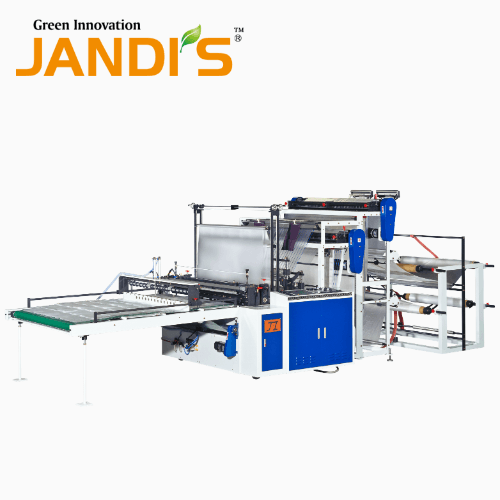
Bottom Sealing Bag Making Machine Biodegradable Material(GF-A/SV Series )
カテゴリー : カッティングマシン
The GF-A/SV Series is a bottom sealing bag making machine configured for biodegradable material. It is the biodegradable-film version of JANDI'S GF-A/SV knife-cutting bag makers: tubular film is fed through a servo-driven machine that seals the bottom of each bag and cuts it off with a knife, producing flat bottom-sealed bags from PLA and PBAT based compounds.The GF-A/SV range is built in single-deck and multi-deck configurations, with the number of lines and the cutting width chosen per model, and the biodegradable version follows the same layout. Cutting width, cutting length, film thickness range, number of lines and production speed are confirmed with the buyer at quotation.Type: bottom sealing bag making machine for biodegradable material, GF-A/SV SeriesMaterial: PLA and PBAT based biodegradable filmServo driveKnife-cutting, bottom sealingSingle-deck and multi-deck configurations in the rangeNumber of lines and cutting width per modelCutting length, film thickness and speed confirmed at quotation
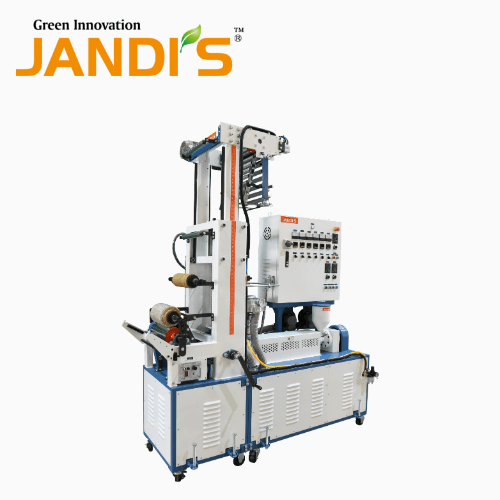
Lab Blown Film Machine for Biodegradable Material(TINY-BC28)
カテゴリー : ブローンフィルム押出機
The TINY-BC28 is a laboratory blown film machine for biodegradable material. It is the biodegradable-resin counterpart of JANDI'S TINY-28 tiny inflation machine, sized for lab use, small and thin film samples and colour testing, so that PLA and PBAT based compounds can be blown into sample film on a small extruder before a production line is specified.Like the TINY series, it is a compact single-layer unit with a small-diameter screw, a blown film die, a take-up unit and a single-station surface-friction winder, operated from a temperature control panel. Film width and output are those of a bench-scale machine; the exact figures and the screw and die configuration for biodegradable compounds are confirmed at quotation.Type: laboratory blown film machine, model TINY-BC28Material: PLA and PBAT based biodegradable compoundsApplication: lab use, small and thin film samples, colour testingSmall-diameter extruder with blown film dieTake-up unit and single-station surface-friction winderTemperature control panelFilm width and output confirmed at quotation
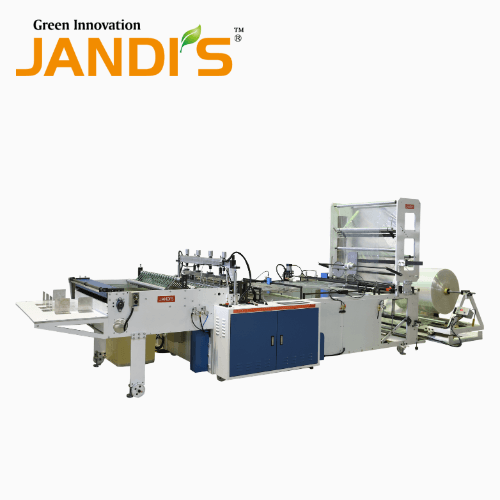
Side Sealing Bag Making Machine Biodegradable Material(GF-S/SV Series)
カテゴリー : プラスチック袋製袋機
The GF-S/SV Series is a side sealing bag making machine configured for biodegradable material. It is the biodegradable-film version of JANDI'S GF-S/SV and SE/SV side sealers: folded or tubular film is sealed and cut along the side to make side-seal bags from PLA and PBAT based film.The GF-S/SV layout includes a rear feeder with gusset, fold, slitter and adhesive tape applicator functions, a servo drive, an HMI control panel, a printing scanner, a conveying belt and a collecting table. Options in the range include tension control, EPC edge guiding, a triangle folding device, punch hole and Mexican-hat punch devices, ultrasonic sealing, a perforating sealing knife, an envelope punching mould and an automatic stacking table. Cutting width, cutting length, film thickness range and production speed are confirmed at quotation.Type: side sealing bag making machine for biodegradable material, GF-S/SV SeriesMaterial: PLA and PBAT based biodegradable filmServo drive with HMI control panelRear feeder: gusset, fold, slitter, adhesive tape applicatorPrinting scanner, conveying belt and collecting tableOptions: tension control, EPC, triangle folding, punch hole, Mexican-hat punchOptions: ultrasonic sealing, perforating sealing knife, envelope punching mould, automatic stacking tableCutting width, length, film thickness and speed confirmed at quotation
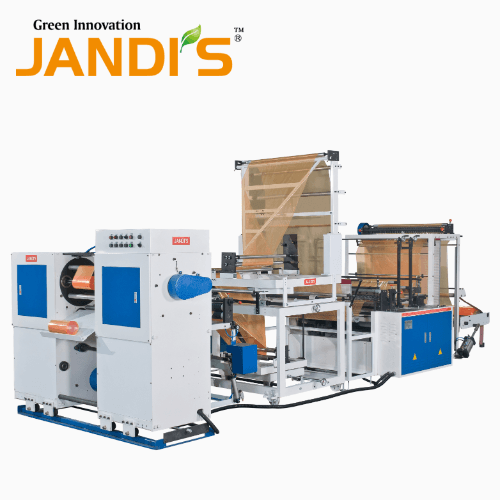
Bag-on-Roll Making Machine Biodegradable Material(GF-R/SV Series)
カテゴリー : プラスチック袋製袋機
The GF-R/SV Series is a bag-on-roll making machine configured for biodegradable material. It is the biodegradable-film version of JANDI'S servo-driven semi-automatic GF-R/SV bag-on-roll machines: tubular film is sealed and perforated at each bag length and wound into rolls of tear-off bags, using PLA and PBAT based compounds instead of polyethylene.The machine follows the GF-R/SV layout, with a tension-type sealing knife, a perforating knife of teeth or band-saw type, a silicone roller sealing base, a temperature controller and a printing scanner for printed film. Single-line and two-line models are available in the range, with maximum cutting width, cutting length and production speed depending on the model; longer cutting lengths are available on request. Model selection is confirmed at quotation.Type: bag-on-roll making machine for biodegradable material, GF-R/SV SeriesMaterial: PLA and PBAT based biodegradable filmServo drive, semi-automaticTension-type sealing knife with silicone roller sealing basePerforating knife: teeth type or band sawTemperature controller and printing scannerSingle-line and two-line models in the rangeCutting width, length and speed confirmed at quotation
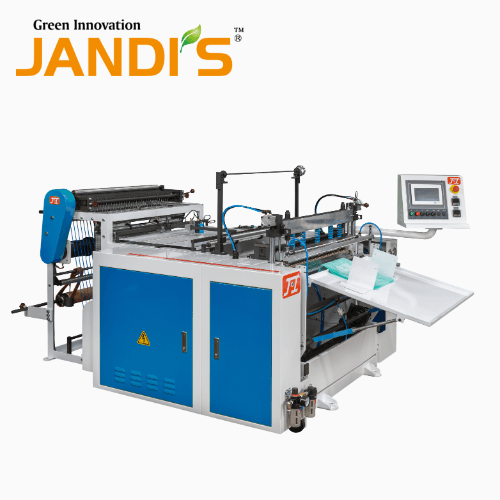
Bottom Sealing Bag Making Machine for Water Soluble Material(GF-WJ Series)
カテゴリー : 用途別製袋機
The GF-WJ Series is a bottom sealing bag making machine for water soluble material. PVA based water soluble film is fed from the unwind stand, sealed across the bottom of each bag and cut off, producing water soluble bags. It sits in JANDI'S bag making range next to the GF-J/SV bottom sealing machines for conventional and biodegradable film, as the machine specified for water soluble film.Drive type, sealing and cutting method, cutting width, cutting length, film thickness range and production speed of the GF-WJ Series are specified with the buyer at quotation, together with the film handling from unwind to sealing that water soluble film requires.Type: bottom sealing bag making machine for water soluble material, GF-WJ SeriesMaterial: PVA based water soluble filmBottom sealing and cut-off from tubular filmRelated JANDI'S listing: GF-J/SV bottom sealing bag making machinesDrive, sealing method, cutting width, length, film thickness and speed confirmed at quotation
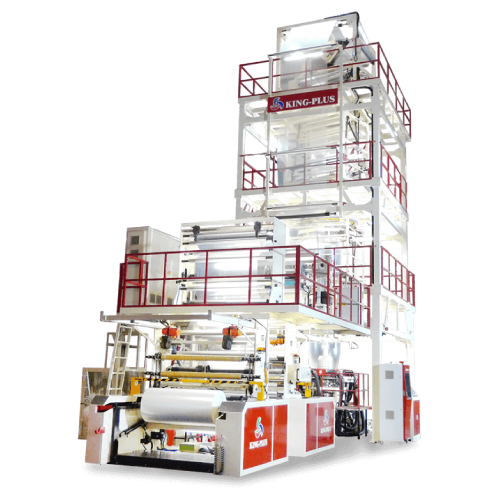
三層共押出ブローンフィルムマシン
カテゴリー : 共押出ブロー成形機
今日では、軟包装は、木材、紙箱、ガラス、スチールなど、製造に多くのエネルギーを必要とする容器に取って代わります。軟包装は上記材料に比べて加工温度が低いため、二酸化炭素の排出量を大幅に削減できます。軟包装の開発が現在の新しい市場トレンドになることは間違いありません。軟包装の用途は、消費財、工業製品、食品、医療、電子製品などであり、防止フィルム、保護フィルム、収縮フィルムなどがあります。軟包装業界は、フィルム構造をダウンゲージし、複数の異なる性能を同時に持つ方法を重視しています。多層マシンは、期待される結果を達成する可能性があります。多層機械の複数の材料は、各層で異なる性能を発揮する可能性があります。また、材料と生産のコストを削減するために、ユーザーが樹脂をより広範囲に操作できるように、材料の分布をより柔軟に調整できる可能性があります。現在、サステナビリティの問題において、リサイクルからリユースへの可能性や生分解性素材の開発が注目されています。軟包装業界では、各メーカーにとって、高機能フィルムを実現すると同時に、省エネルギーと環境への配慮を実現する機会であり、挑戦でもあります。お気軽にお問い合わせいただき、フィルムに関する情報をお知らせください。King-Plus は、お客様の要件に合わせたオーダーメイドのインフレーション フィルム マシンを提供します。

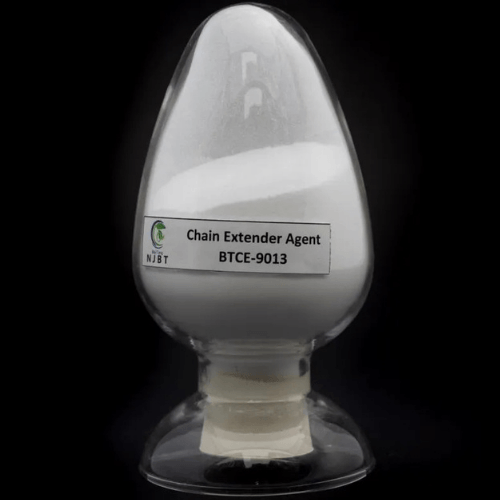
chain extender
カテゴリー : 添加剤
BTCE-9013 is a polymeric epoxy functionalized chain extender. The epoxy functional groups in its structure can react with the terminal carboxyl, hydroxyl, and amino groups in long-chain resin molecules to extend the polymer chain, thereby improving the resin's mechanical properties, intrinsic viscosity, and inhibiting polymer hydrolysis. It can be used in food contact materials. BTCE-9013 is generally co-extruded with modified resins using twin-screw or single-screw extruders. The recommended dosage for bio-based and biodegradable plastics such as polybutylene adipate/terephthalate (PBAT), polylactic acid (PLA), polybutylene succinate (PBS), polymethyl ethylene carbonate (PPC), and polyhydroxyalkanoates (PHAs) is 0.2-0.8 phr. The recommended dosage for condensation-based recycled plastics such as polyamide (PA), polybutylene terephthalate (PBT), polycarbonate (PC), and polyethylene terephthalate (PET) is 0.2-1.5 phr. The specific dosage depends on the number of active functional groups in the resin and the performance requirements of the product.

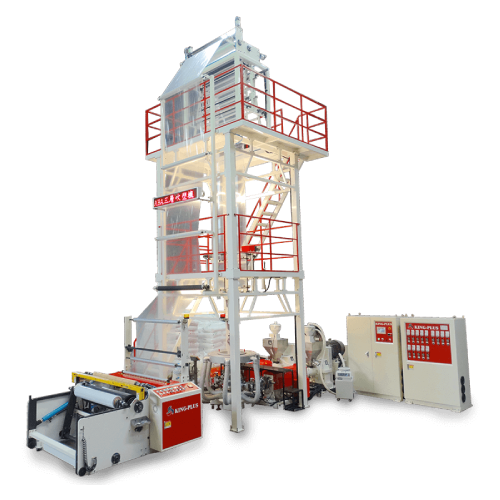
ABA 3 層共押出インフレーション フィルム マシン
カテゴリー : 共押出ブロー成形機
今日では、軟包装は、木材、紙箱、ガラス、スチールなど、製造に多くのエネルギーを必要とする容器に取って代わります。軟包装は上記材料に比べて加工温度が低いため、二酸化炭素の排出量を大幅に削減できます。軟包装の開発が現在の新しい市場トレンドになることは間違いありません。軟包装の用途は、消費財、工業製品、食品、医療、電子製品などであり、防止フィルム、保護フィルム、収縮フィルムなどがあります。軟包装業界は、フィルム構造をダウンゲージし、複数の異なる性能を同時に持つ方法を重視しています。多層マシンは、期待される結果を達成する可能性があります。多層機械の複数の材料は、各層で異なる性能を発揮する可能性があります。また、材料と生産のコストを削減するために、ユーザーが樹脂をより広範囲に操作できるように、材料の分布をより柔軟に調整できる可能性があります。現在、サステナビリティの問題において、リサイクルからリユースへの可能性や生分解性素材の開発が注目されています。軟包装業界では、各メーカーにとって、高機能フィルムを実現すると同時に、省エネルギーと環境への配慮を実現する機会であり、挑戦でもあります。お気軽にお問い合わせいただき、フィルムに関する情報をお知らせください。King-Plus は、お客様の要件に合わせたオーダーメイドのインフレーション フィルム マシンを提供します。
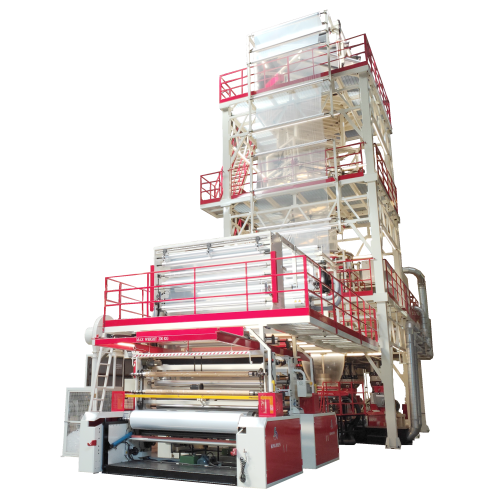
5層共押出インフレーションフィルムマシン
カテゴリー : 共押出ブロー成形機
今日では、軟包装は、木材、紙箱、ガラス、スチールなど、製造に多くのエネルギーを必要とする容器に取って代わります。軟包装は上記材料に比べて加工温度が低いため、二酸化炭素の排出量を大幅に削減できます。軟包装の開発が現在の新しい市場トレンドになることは間違いありません。軟包装の用途は、消費財、工業製品、食品、医療、電子製品などであり、防止フィルム、保護フィルム、収縮フィルムなどがあります。軟包装業界は、フィルム構造をダウンゲージし、複数の異なる性能を同時に持つ方法を重視しています。多層マシンは、期待される結果を達成する可能性があります。多層機械の複数の材料は、各層で異なる性能を発揮する可能性があります。また、材料と生産のコストを削減するために、ユーザーが樹脂をより広範囲に操作できるように、材料の分布をより柔軟に調整できる可能性があります。現在、サステナビリティの問題において、リサイクルからリユースへの可能性や生分解性素材の開発が注目されています。軟包装業界では、各メーカーにとって、高機能フィルムを実現すると同時に、省エネルギーと環境への配慮を実現する機会であり、挑戦でもあります。お気軽にお問い合わせいただき、フィルムに関する情報をお知らせください。King-Plus は、お客様の要件に合わせたオーダーメイドのインフレーション フィルム マシンを提供します。
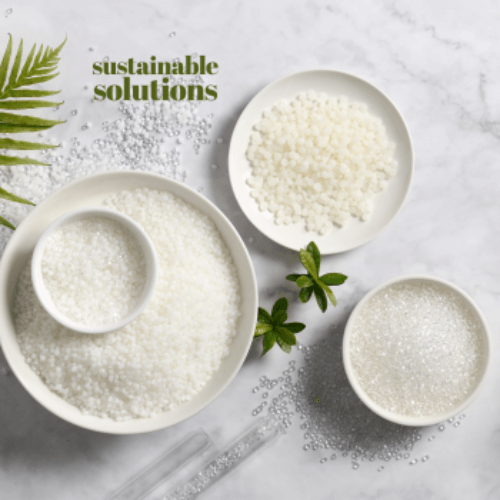
Bio-based TPU
カテゴリー : ポリ乳酸
TPU is made from non-food crops, such as straw, grass, bagasse, rice husk, wood chips and other waste materials, through refining, fermentation and synthesis processes using biological, chemical and physical methods. It is environmentally friendly, recyclable and biodegradable. High bio-based content material with environmental benefits can take step toward sustainability.

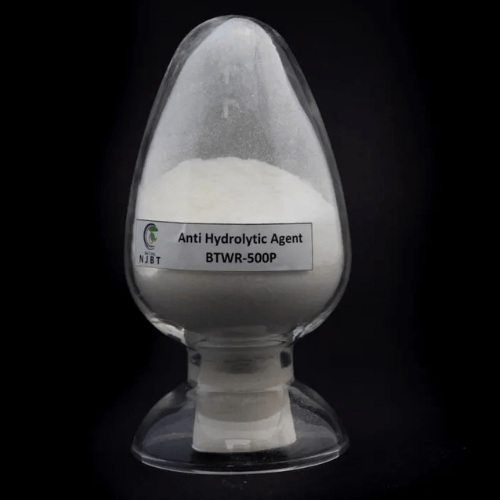
Anti-hydrolysis agent
カテゴリー : 添加剤
BTCE-9013 is a polymeric epoxy functionalized chain extender. The epoxy functional groups in its structure can react with the terminal carboxyl, hydroxyl, and amino groups in long-chain resin molecules to extend the polymer chain, thereby improving the resin's mechanical properties, intrinsic viscosity, and inhibiting polymer hydrolysis. It can be used in food contact materials. BTCE-9013 is generally co-extruded with modified resins using twin-screw or single-screw extruders. The recommended dosage for bio-based and biodegradable plastics such as polybutylene adipate/terephthalate (PBAT), polylactic acid (PLA), polybutylene succinate (PBS), polymethyl ethylene carbonate (PPC), and polyhydroxyalkanoates (PHAs) is 0.2-0.8 phr. The recommended dosage for condensation-based recycled plastics such as polyamide (PA), polybutylene terephthalate (PBT), polycarbonate (PC), and polyethylene terephthalate (PET) is 0.2-1.5 phr. The specific dosage depends on the number of active functional groups in the resin and the performance requirements of the product.